Knossos Palace, Knossos Museum & Heraklion City
The centre of Minoan civilisation and capital of Minoan Crete lay 5km south of Heraklion....
Visão geral
Destaques
Descrição
The centre of Minoan civilisation and capital of Minoan Crete lay 5km south of Heraklion.
itenário
The Heraklion Archaeological Museum is one of the most important museums in Greece! Covering a period from the Neolithic to the Roman period, its exhibits are representative samples from the Cretan prehistory and history. Here you will find the largest collection of Minoan antiquities in the world and for this reason it is regarded as the most important museum of Minoan civilization. Discover among the majolica tiles, which represent the facades of two or three-storied Minoan houses.
The famous frescoes in the Minoan palaces were colourful compositions with plant and animal motifs and representations of the locals’ religious and social life. The colours employed are white, red and yellow, green, black and Egyptian blue. Observe the ‘Ladies in Blue’, a fresco from the palace of Knossos, exhibited at the Archaeological Museum of Heraklion. They bear rich, decorated headdresses and jewels on the neck and the arms.
The Palace of Knossos is the most important and largest Minoan Palace in Crete! A multi-storey construction, with carved streets and magnificent, colourful mural decorations, the ceremonial chambers, the warehouses and the workshops, the sanctuaries, the treasuries and the throne room. The buildings and frescoes of the palace were decorated in striking colours, such us red and Egyptian blue.
Let the mystery unravel! The labyrinth, designed by the ingenious Dedalus, is through to have existed in the underground space of the Knossos palace. According to mythology, it was the home of the Minotaur, hybrid creature with the head of a bull and the body of a man. Theseus was the only one who succeeded in exiting the labyrinth. After killing the Minotaur, he was able to retrace his path using a ball of thread he had unravelled, the mitos.
Heraklion is the largest city in Crete, it ranks fourth in the country, with a population around 250,000. Built on the north coast of the island overlooking the Cretan Sea, it seems to be protected by its old Venetian walls, the most important monument inherited from the Venetian occupation, which underlines the city’s adventurous past.
History connects the place antiquity and Europe. According to Greek mythology, Zeus, the Father of Gods, brought here the beautiful young virgin Europa with whom he had fallen in love. Their romantic union gave birth to a son, Minos, whose name was borrowed by all the subsequent kings of Crete as well as the historic civilization.
During the 19th century A.D. the Arabs occupied Crete and founded at the site of Heraklion a new city called Rabdhal Khandak (Castle of the ditch): the name Handakas is still used by some of the older residents of Heraklion. In the 10th century the Byzantines took control of the island and managed to stay in power until the beginning of the 13th century.
During the 14th century, the Venetians conquered the city. The Venetian period lasted four and a half centuries and it was a period of great progress for the city talking about development in areas such as trade and architecture, literature and art.
The city walls: Heraklion surrounded by a formidable medieval wall, which was used to protect it from enemies. Owning to this, the city enjoyed the reputation as well-fortified state in the Mediterranean base in. It stood up to a siege from the Turks for 21 years, but was finally scized in 1669 after its betrayed by a Greek-Venetian engineer who informed the invaders of the walls’ weaknesses at east and west bastions. It is possible to walk along the top of these walls and enjoy a view over the city. You may reach the Grave of the Cretan writer Nikos Kazantzakis (1883-1957) where it is written: ‘’I hope for nothing, I fear nothing: I am free”.
Koules Fortress the Venetian fortress in the entrance of the harbour, the symbol of the city & Venetian Loggia the most elegant Venetian monument in Crete.
Eleftheriou Venizelou Square (Lion Square) is one of the busiest parts of Heraklion. It is never quiet, unfolding its various aspects 24 hours day, 365 days a year.
The Bembo fountain a wonderful Venetian fountain next to a Turkish monument in Kornarou Square, the square of Erotokritos and Aretousa, the great Cretan poet Vitsentzos Cornaros.
O que está incluído ou não
Incluído:
NÃO incluído:
Serviço de limusina INCLUÍDO com seu próprio motorista

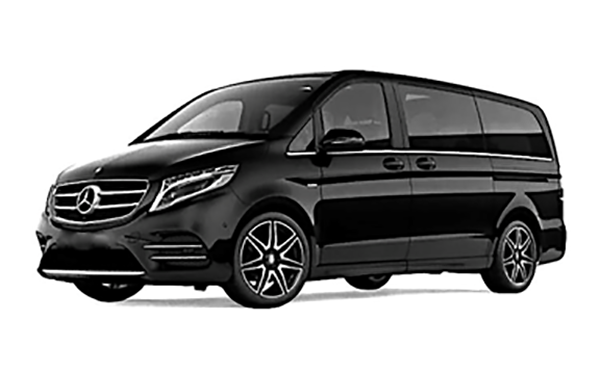
MERCEDES V-CLASS (até 7 pax)

MERCEDES SPRINTER (até 16 pax)
De acordo com seus assentos de passageiro, nós tentaríamos escolher o veículo de luxo perfeito para sua excursão!
Serviços de motorista incluso no pacote de passeio GRÁTIS!
Ver mais pacotes turísticos de Crete

Política de reserva e cancelamento
Nenhuma taxa de reserva ou de cartão de crédito!
Comentários
Pergunta? Fazer uma consulta ou ligue para +30 6947 218 736
